

Contemplation
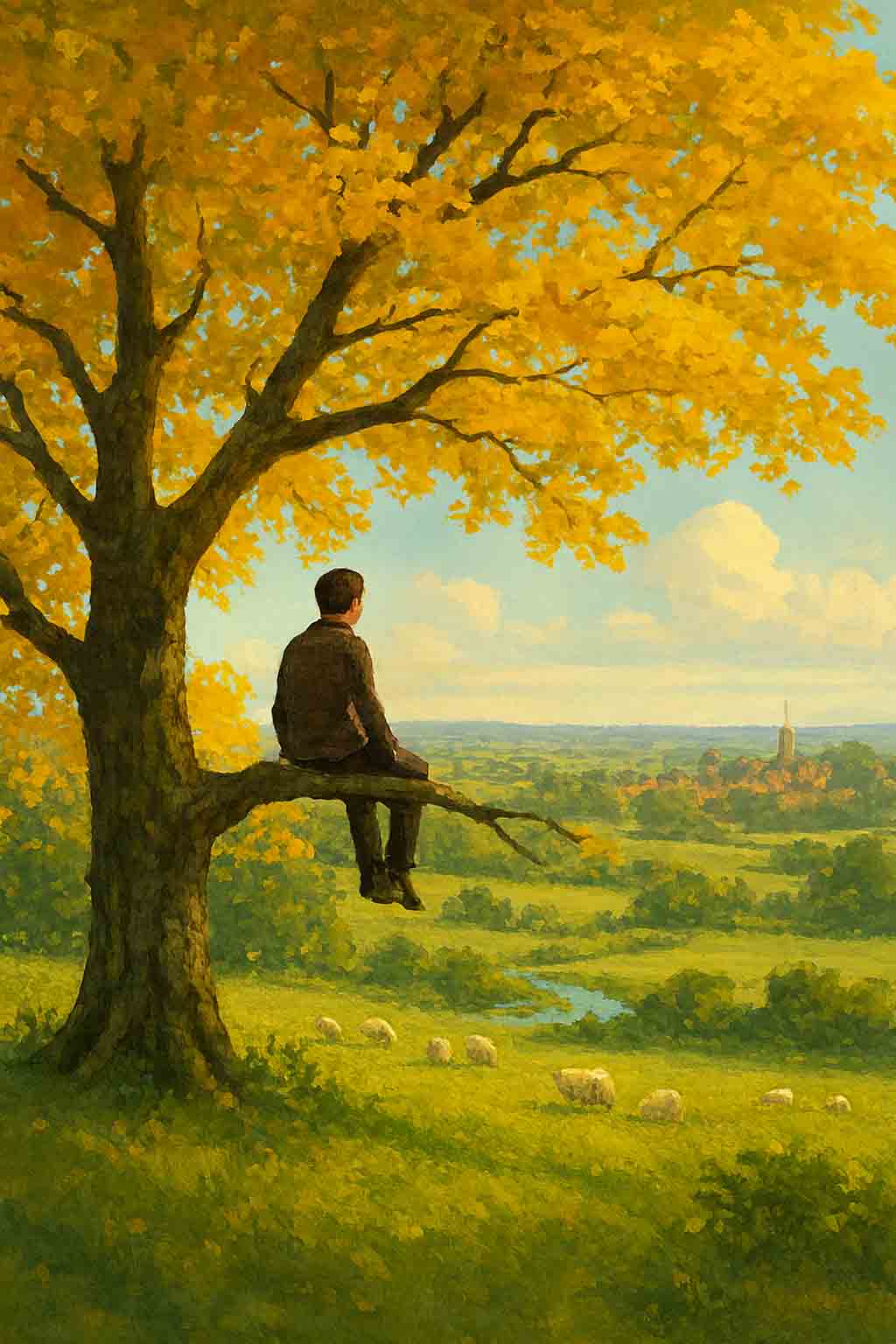
by John Carpenter
The poem “Contemplation” is written by John Carpenter. The word contemplation means thinking quietly and deeply. In this poem, the poet describes his experience of sitting on a tree and looking at the world around him. From the top of the tree, he can see fields, rivers, sheep, and even the distant town. The poem is about seeing, thinking, and enjoying nature.
A dappled (ছোপ ছোপ রঙের) yellow tree And gazed abroad (দূরে, চারদিকে তাকিয়ে থেকেছি) at many things I've always wished to see. দিনের পর দিন আমি একটি গাছে উঠেছি একটি ছোপ ছোপ হলুদ গাছে এবং অনেক জিনিসের দিকে দূর থেকে তাকিয়ে থেকেছি যা আমি সবসময় দেখতে চেয়েছি।
Word Meaning:
- Contemplation – গভীর চিন্তা, মনন (deep thought, reflection)
- Dappled – ছোপ ছোপ রঙের (spotted, marked with patches of color)
- Gazed – তাকিয়ে থাকা (looked steadily, stared)
- Abroad – দূরে, চারদিকে (far away, all around)
Paraphrase with Explanation:
In the first stanza, the poet says that for many days he has been climbing a spotted yellow tree. The tree has yellow leaves with spots and looks beautiful. He sits on the tree and looks around from a high place. From there, he can see many things that he always wanted to see. The poet feels happy and curious. This stanza shows the poet’s love for sitting quietly and watching the world. [প্রথম স্তবকটিতে কবি বলেছেন যে অনেক দিন ধরে তিনি একটি দাগযুক্ত হলুদ গাছে উঠছেন। গাছটিতে হলুদ দাগযুক্ত পাতা রয়েছে এবং দেখতে সুন্দর। তিনি গাছে বসে একটি উঁচু জায়গা থেকে চারপাশে তাকান। সেখান থেকে তিনি এমন অনেক কিছু দেখতে পান যা তিনি সর্বদা দেখতে চেয়েছিলেন। কবি খুশি এবং কৌতূহলী বোধ করেন। এই স্তবকটি কবির চুপচাপ বসে পৃথিবী দেখার প্রতি ভালোবাসা প্রকাশ করে।]
All bounded (ঘেরা) in with hedge (গাছের বেড়া) And shining rivers swimming through The rushes (নদীর তীরে জন্মানো লম্বা ঘাস) on the edge (প্রান্ত, ধারে), And little sheep (ভেড়া) who play all day I watch them as they run, While far away (অনেক দূরে) the roofs (ছাদ) of town Are shining (ঝলমল করছে) in the sun. আমি দেখি সবুজ আর কোমল মাঠগুলো, যেগুলো গাছের বেড়া দিয়ে ঘেরা, এবং চকচকে নদীগুলো বয়ে যাচ্ছে নদীর ধারের ঘাসের ফাঁক দিয়ে, আর ছোট ছোট ভেড়াগুলো সারাদিন খেলে, আমি দেখি তারা কেমন দৌড়ায়, দূরে শহরের ছাদগুলো সূর্যের আলোয় ঝলমল করছে।
Word Meaning:
- Gentle – কোমল, শান্ত (soft, calm, kind, or mild)
- Bounded – ঘেরা (surrounded, enclosed)
- Hedge – গাছের বেড়া (a fence made of bushes or shrubs)
- Rushes – নদীর তীরে জন্মানো লম্বা ঘাস (tall grass growing by rivers or lakes)
- Edge – প্রান্ত, ধারে (border, outer part, or margin)
- Sheep – ভেড়া (a farm animal with thick wool)
- Roof (roofs) – ছাদ (the top covering of a house or building)
- Shining – ঝলমল করছে (glowing, bright, giving off light)
- Far away – অনেক দূরে (at a great distance)
Paraphrase with Explanation:
In the second stanza, the poet describes what he sees from the tree. He sees green fields that are surrounded by hedges. He also sees shining rivers flowing through grass and bushes. Tall grasses are growing by the river. He notices little sheep playing and running all day. Far away, he can see the roofs of the town shining in the sunlight. This stanza shows the beauty of nature and village life. Everything looks peaceful and lovely. [দ্বিতীয় স্তবকটিতে, কবি গাছ থেকে যা দেখেন তা বর্ণনা করেছেন। তিনি বেড়া দিয়ে ঘেরা সবুজ মাঠ দেখতে পান। তিনি ঘাস এবং ঝোপের মধ্য দিয়ে প্রবাহিত উজ্জ্বল নদীও দেখতে পান। নদীর ধারে লম্বা ঘাস জন্মেছে। তিনি সারাদিন ছোট ছোট ভেড়াদের খেলা এবং দৌড়াদৌড়ি করতে দেখেন। অনেক দূরে, তিনি সূর্যের আলোয় শহরের ছাদগুলি জ্বলজ্বল করতে দেখতে পান। এই স্তবকটি প্রকৃতি এবং গ্রামীণ জীবনের সৌন্দর্য দেখায়। সবকিছু শান্ত এবং মনোরম দেখাচ্ছে।]
So high and look so far— How very large (কত বড়) the world can be! How many things (অনেক জিনিস) there are! আমি মনে করি, বসে থাকা খুবই ভালো লাগে, এত উঁচুতে বসে এত দূর পর্যন্ত দেখা যায়— কত বড় হতে পারে এই পৃথিবী! কত জিনিসই না আছে এই পৃথিবীতে!
Word Meaning:
- Large – বড় (big, great in size)
- Many things – অনেক জিনিস (a lot of objects, events, or matters)
Paraphrase with Explanation:
In the third stanza, the poet says that he feels very happy sitting so high on the tree and looking so far. From this place, the world looks very big to him. He realizes that there are many things in the world to see and enjoy. This stanza shows the poet’s deep thinking. He understands the greatness and beauty of the world by quietly observing nature. [তৃতীয় স্তবকটিতে কবি বলেছেন যে, গাছের উপর এত উঁচুতে বসে এত দূর তাকিয়ে তিনি খুব খুশি বোধ করেন। এই জায়গা থেকে পৃথিবী তার কাছে অনেক বড় মনে হয়। তিনি বুঝতে পারেন যে পৃথিবীতে দেখার এবং উপভোগ করার মতো অনেক কিছু আছে। এই স্তবকটি কবির গভীর চিন্তাভাবনাকে প্রকাশ করে। তিনি নীরবে প্রকৃতি পর্যবেক্ষণ করে বিশ্বের মাহাত্ম্য এবং সৌন্দর্য বোঝেন।]
Short Answer Practice for Students
1. Central theme:
The central theme of the poem is the joy of seeing the wide world from a higher place. The poem shows a child’s curiosity, wonder and love for nature.
2. Message of the poem:
The poem gives the message that the world is large, beautiful and full of things to see. It encourages us to observe nature and enjoy its beauty with a curious mind.
3. Idea of freedom:
The poem reflects the poet’s idea of freedom through the speaker’s climb up the tree. From the tree, the speaker can look far and enjoy the open beauty of the world.
4. Climbing the tree:
The speaker climbs a dappled yellow tree for days and days. From there, he looks around at many things he has always wished to see.
5. Things seen from the tree:
The speaker sees green fields, shining rivers, rushes, little sheep and the roofs of a town. These sights make the world seem large and beautiful to him.
6. Beauty of nature:
The poet shows the beauty of nature through green fields, shining rivers and playful sheep. These images create a peaceful and pleasant picture of the countryside.
7. Green and gentle fields:
The green and gentle fields suggest peace, freshness and natural beauty. They are bounded in with hedges, which makes the scene look orderly and charming.
8. Shining rivers:
The rivers are described as shining and swimming through the rushes. This gives a lively and beautiful picture of flowing water.
9. Little sheep:
The little sheep play all day and run in the fields. They add movement, innocence and joy to the natural scene.
10. Roofs of town:
The speaker sees the roofs of town shining in the sun far away. This shows that he can see both nature and human life from the tree.
11. Sitting high:
The speaker likes to sit high because he can look far from there. It gives him a sense of freedom, wonder and happiness.
12. “How very large the world can be!”:
This line shows the speaker’s surprise at the vastness of the world. From the tree, he realizes that the world is much bigger than he thought.
13. Child’s curiosity:
The poem shows a child’s curiosity through the speaker’s wish to see many things. He climbs the tree to explore the world with his eyes.
14. Wonder and imagination:
The poem expresses wonder through the speaker’s excitement at seeing fields, rivers, sheep and distant town roofs. His imagination grows as he looks at the wide world.
15. Lesson from the poem:
The poem teaches us to observe the world with curiosity and joy. It also teaches us that nature is beautiful and the world is full of wonderful things.
Model Answers
1. What is the central theme of the poem “Contemplation”?
The central theme of the poem is the joy of seeing the wide world. The speaker sees many beautiful things from a tree.
2. What message does John Carpenter convey through the poem “Contemplation”?
John Carpenter says that the world is large and beautiful. We should look at nature and enjoy its beauty.
3. How does the poem “Contemplation” reflect the poet’s idea of freedom?
The speaker climbs a tree and looks far away. From the tree, he feels free and happy.
4. Where does the speaker climb in the poem?
The speaker climbs a tree. It is a dappled yellow tree.
5. Why does the speaker climb the tree?
The speaker climbs the tree to see many things. He wants to see the things he has always wished to see.
6. What does the speaker see from the tree?
The speaker sees green fields, shining rivers and little sheep. He also sees the roofs of a town far away.
7. How does the poet show the beauty of nature in the poem?
The poet shows green fields, shining rivers and playful sheep. These things make nature look beautiful and peaceful.
8. What does the speaker mean by “gazed abroad at many things”?
The speaker means that he looked far and wide. He saw many things from the tree.
9. What are the green and gentle fields bounded with?
The green and gentle fields are bounded with hedges. The hedges are around the fields.
10. How are the rivers described in the poem?
The rivers are described as shining. They seem to move through the rushes near the edge.
11. What do the little sheep do in the poem?
The little sheep play all day. The speaker watches them as they run.
12. What does the speaker see far away?
The speaker sees the roofs of town far away. The roofs are shining in the sun.
13. Why does the speaker like to sit high in the tree?
The speaker likes to sit high because he can look far. He can see many beautiful things from there.
14. What does the line “How very large the world can be!” suggest?
This line suggests that the speaker is surprised. He feels that the world is very big and full of many things.
15. How does the poem show a child’s curiosity?
The speaker wants to see many things. He climbs the tree and looks around with great interest.
16. How does the poem show wonder and imagination?
The poem shows the speaker’s wonder at the large world. He looks at fields, rivers, sheep and town roofs with joy.
17. What feeling does the speaker have after seeing the wide world?
The speaker feels happy and surprised. He feels that the world is large and full of many things.
18. What lesson can you learn from the poem “Contemplation”?
We learn that we should look at the world with interest. Nature is beautiful, and the world has many wonderful things.